Elevate Your Space: Infusing Spiritual Serenity with Mandala Designs
In our fast-paced modern world, creating a sanctuary of peace and tranquility within our homes has become more important than ever. The spaces we inhabit directly influence our mental well-being, emotional balance, and spiritual growth. One of the most powerful ways to transform your environment into a haven of serenity is through the incorporation of mandala designs. These ancient, sacred geometric patterns have captivated cultures across the globe for thousands of years, and their presence in contemporary interior design continues to inspire and uplift those who encounter them.
At LunaBryant, we understand the profound impact that thoughtfully curated spaces can have on your daily life. Mandala designs represent far more than mere aesthetic choices; they embody spiritual wisdom, mathematical precision, and artistic beauty that converge to create environments that nourish the soul. This comprehensive guide will explore how you can harness the transformative power of mandala designs to elevate your space and infuse it with spiritual serenity.
Understanding Mandala: Ancient Wisdom Meets Modern Living
The Origins and Significance of Mandala
The word mandala originates from Sanskrit, meaning circle or center. These intricate geometric patterns have been used for centuries in Hindu, Buddhist, and other spiritual traditions as tools for meditation, healing, and spiritual awakening. The mandala represents the universe in its entirety, with the center symbolizing the divine source and the radiating patterns illustrating the infinite nature of existence.
Historically, mandalas served multiple purposes within spiritual communities. Monks and spiritual practitioners created elaborate mandalas as meditation focal points, believing that gazing upon these sacred patterns could facilitate deeper states of consciousness and spiritual insight. The creation of mandalas was itself considered a meditative practice, with each line and curve drawn with intention and mindfulness.
The beauty of mandala designs lies in their universal appeal and adaptability. While rooted in ancient spiritual traditions, mandalas have transcended cultural boundaries and religious contexts to become symbols of harmony, balance, and wholeness that resonate with people from all walks of life. In today's world, where stress and anxiety are prevalent, the mandala's message of unity and centeredness offers a powerful antidote to the chaos of modern existence.
The Psychological and Spiritual Benefits of Mandala Designs
The impact of mandala designs extends beyond their visual appeal. Numerous studies have demonstrated the psychological benefits of engaging with mandala patterns. The symmetrical nature of mandalas has a naturally calming effect on the human mind, as our brains are inherently drawn to patterns and symmetry. When we observe a mandala, our minds naturally follow the geometric progression from the center outward, creating a meditative experience that can reduce stress and anxiety.
From a spiritual perspective, mandalas serve as visual representations of our inner journey toward wholeness and self-discovery. The circular structure symbolizes the cyclical nature of life, the eternal return, and the interconnectedness of all things. By surrounding ourselves with mandala designs, we create visual reminders of these profound truths, supporting our spiritual development and personal growth.
The mandala's concentric circles and radiating patterns also represent the concept of chakras in Hindu and Buddhist traditions. Each layer of the mandala can correspond to different aspects of consciousness and spiritual development, making these designs particularly powerful tools for those engaged in chakra work or energy healing practices.
Incorporating Mandala Designs into Your Home Decor
Wall Art and Tapestries
One of the most impactful ways to introduce mandala designs into your space is through wall art and tapestries. A large mandala tapestry can serve as a stunning focal point in any room, instantly transforming the energy and aesthetic of your space. Whether you choose a traditional hand-painted mandala or a contemporary digital interpretation, wall-mounted mandalas create a visual anchor that draws the eye and invites contemplation.
When selecting mandala wall art, consider the color palette of your existing decor. Warm earth tones like terracotta, gold, and deep reds create a grounding, nurturing atmosphere, while cool blues, purples, and silvers promote calmness and spiritual connection. At LunaBryant, we offer a diverse collection of mandala designs that cater to various aesthetic preferences and spiritual intentions.
For those seeking a more subtle approach, smaller mandala prints arranged in a gallery wall format can create visual interest while maintaining a balanced, harmonious look. This approach allows you to incorporate multiple mandala designs with different color schemes and styles, creating a personalized spiritual gallery that reflects your unique journey.
Textiles and Soft Furnishings
Mandala designs on textiles bring warmth and comfort to your living spaces while infusing them with spiritual energy. Mandala-patterned throw pillows, blankets, and cushions not only add visual interest to your furniture but also create tactile reminders of peace and centeredness throughout your home.
Bedding featuring mandala designs can transform your bedroom into a sanctuary of rest and spiritual renewal. Sleeping surrounded by mandala patterns can enhance the quality of your sleep and promote more meaningful dreams. The gentle, symmetrical nature of these designs creates a soothing environment that supports deep relaxation and rejuvenation.
Mandala-printed curtains and drapes offer another elegant way to incorporate these sacred patterns into your home. As light filters through mandala-patterned fabric, it creates beautiful shadows and patterns that shift throughout the day, adding dynamic visual interest while maintaining the spiritual essence of the design.
Flooring and Rugs
Mandala rugs serve as both functional and spiritual elements in your home. A large mandala rug can define a space, whether in your living room, meditation area, or bedroom. The tactile experience of walking barefoot on a mandala rug creates a grounding connection to the earth and the sacred geometry beneath your feet.
When selecting a mandala rug, consider the size and placement carefully. A rug that anchors your seating area creates a sense of unity and cohesion, while smaller mandala rugs can be placed in meditation spaces or bedside areas to create intimate zones of spiritual focus.
Creating a Dedicated Meditation and Spiritual Space
Designing Your Sacred Sanctuary
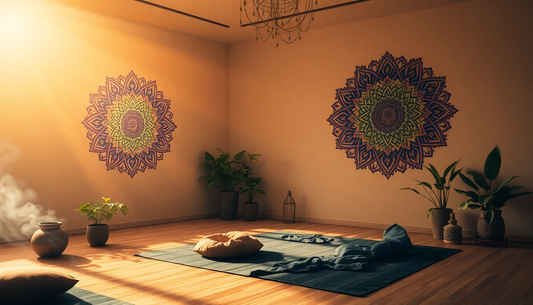
Creating a dedicated space for meditation and spiritual practice amplifies the benefits of mandala designs. This sanctuary doesn't require much space; even a small corner of a room can be transformed into a powerful spiritual center. The key is intentionality and consistency in how you design and use this space.
Begin by selecting a location that feels naturally peaceful and free from distractions. This might be a corner with natural light, a quiet bedroom nook, or even a closet that can be converted into a meditation chamber. Once you've identified your space, establish clear boundaries, both physically and energetically, that signal to yourself and others that this is a sacred area.
The foundation of your meditation space should feature a mandala design as the primary focal point. This could be a large tapestry on the wall, a mandala rug on the floor, or even a mandala painted directly on the wall if you're feeling particularly committed to your spiritual practice. This visual anchor will guide your attention during meditation and help establish the spiritual tone of the space.
Complementary Elements for Your Spiritual Space
While mandala designs form the spiritual foundation of your sanctuary, complementary elements enhance the overall energy and functionality of the space. Incorporate natural elements such as plants, stones, and wood to ground the space in earth energy. Living plants not only purify the air but also bring vital life force energy into your meditation area.
Lighting plays a crucial role in creating the right atmosphere. Soft, warm lighting from candles, salt lamps, or dimmable lights creates an inviting, peaceful environment. Avoid harsh overhead lighting that can feel jarring and disruptive to meditation practice. Consider installing adjustable lighting that allows you to modify the ambiance based on your needs and the time of day.
Incorporate natural materials and textures that invite touch and sensory engagement. A meditation cushion or yoga mat provides physical comfort during practice, while natural fiber textiles add warmth and authenticity to your space. Wooden elements, stone accents, and natural fibers all contribute to creating an environment that feels grounded and connected to nature.
The Color Psychology of Mandala Designs
Understanding Color Meanings in Mandala Art
The colors used in mandala designs carry significant meaning and influence the energy of your space. Understanding color psychology allows you to select mandalas that align with your spiritual intentions and desired emotional states.
Red mandalas symbolize passion, energy, and vitality. These designs are ideal for spaces where you want to cultivate motivation, courage, and dynamic energy. A red mandala in your home office or workout space can inspire action and determination.
Orange mandalas represent creativity, joy, and enthusiasm. These warm, inviting designs promote social connection and emotional expression. Orange mandalas work beautifully in living rooms, creative studios, and spaces where you want to encourage playfulness and innovation.
Yellow mandalas embody optimism, clarity, and intellectual energy. These bright, uplifting designs enhance focus and mental clarity, making them perfect for study areas, offices, and spaces dedicated to learning and growth.
Green mandalas symbolize healing, growth, and renewal. These calming designs promote balance and harmony, making them ideal for bedrooms, bathrooms, and any space dedicated to rest and recovery. Green mandalas also strengthen your connection to nature and environmental consciousness.
Blue mandalas represent communication, truth, and spiritual awareness. These cool, calming designs promote peace and clarity of thought. Blue mandalas are particularly beneficial in meditation spaces and areas where you want to enhance intuition and spiritual insight.
Purple mandalas embody spirituality, wisdom, and transformation. These regal, mystical designs support deep spiritual work and inner transformation. Purple mandalas are excellent choices for meditation spaces, spiritual altars, and areas dedicated to personal growth and enlightenment.
Creating Color Harmony in Your Space
When incorporating multiple mandala designs into your home, consider how different colors interact and influence the overall energy of your space. A monochromatic approach using various shades of a single color creates a cohesive, sophisticated look while maintaining consistent energetic vibration throughout the space.
Complementary color schemes, where you pair colors opposite each other on the color wheel, create dynamic visual interest and balanced energy. For example, pairing blue and orange mandalas creates a stimulating yet harmonious environment that promotes both calm and creativity.
Analogous color schemes, using colors adjacent to each other on the color wheel, create a harmonious, flowing aesthetic. A combination of blue, purple, and pink mandalas creates a serene, spiritually aligned space that feels naturally cohesive.
Mandala Designs for Different Rooms and Purposes
The Bedroom: Rest and Spiritual Renewal
Your bedroom is your personal sanctuary, a space dedicated to rest, rejuvenation, and intimate connection. Mandala designs in the bedroom should promote relaxation, peaceful sleep, and spiritual renewal. Soft, cool-toned mandalas in blues, purples, and silvers create a calming atmosphere conducive to deep sleep and meaningful dreams.
Consider placing a mandala tapestry on the wall opposite your bed, creating a focal point you see as you drift off to sleep and upon waking. Mandala-patterned bedding brings the sacred geometry directly into your sleep space, surrounding you with spiritual energy throughout the night.
For couples, mandala designs can symbolize unity and interconnection. A mandala featuring two intertwined patterns or a mandala with heart-centered imagery can strengthen the spiritual bond between partners while maintaining individual spiritual identities.
The Living Room: Community and Connection
The living room is where family and friends gather, making it an ideal space to infuse with mandala designs that promote harmony, connection, and shared spiritual awareness. A large mandala tapestry or wall art serves as a conversation starter and creates a welcoming, spiritually conscious atmosphere.
Mandala-patterned throw pillows and blankets add comfort and visual interest to seating areas while subtly infusing the space with spiritual energy. These soft furnishings invite people to relax and open their hearts to deeper connection and meaningful conversation.
A mandala rug in the living room defines the gathering space and creates a visual anchor for the room. The circular nature of the mandala naturally encourages people to sit in a circle, promoting equality, connection, and open communication.
The Home Office: Focus and Clarity
In your home office, mandala designs that promote focus, clarity, and mental acuity are particularly beneficial. Yellow and gold mandalas enhance concentration and intellectual energy, while blue mandalas support clear communication and truthful expression.
A mandala positioned at eye level when you're seated at your desk serves as a visual anchor that helps maintain focus during work. When your mind wanders or you feel overwhelmed, gazing at the mandala for a few moments can reset your mental state and restore clarity.
Mandala designs in your office also create a spiritually conscious work environment that reminds you to approach your professional endeavors with intention, integrity, and alignment with your higher purpose.
The Bathroom: Cleansing and Renewal
The bathroom is a space of cleansing and renewal, making it an ideal location for mandala designs that support purification and self-care. Mandala shower curtains, bath mats, and wall art transform your bathroom into a spa-like sanctuary where you can engage in self-care rituals with spiritual awareness.
Green and blue mandalas in the bathroom promote healing and renewal, while mandala designs featuring water elements enhance the natural cleansing energy of this space. Consider creating a small altar or focal point in your bathroom where you can pause and reconnect with yourself during your daily self-care routines.
The Kitchen: Nourishment and Gratitude
The kitchen is the heart of the home, a space where nourishment is prepared and shared. Mandala designs in the kitchen can remind you to approach food preparation with mindfulness, gratitude, and spiritual awareness. Warm-toned mandalas in reds, oranges, and golds create an inviting, nurturing atmosphere that encourages healthy eating and joyful meal preparation.
Mandala-patterned kitchen textiles, such as tea towels and aprons, bring spiritual awareness into your daily cooking and eating rituals. These small touches transform ordinary kitchen activities into mindful, sacred practices.
Mandala Designs and Feng Shui Principles
Balancing Energy with Mandala Geometry
Mandala designs naturally align with feng shui principles, as their symmetrical, balanced geometry promotes the smooth flow of chi energy throughout your space. The circular structure of mandalas represents wholeness and completion, while the radiating patterns symbolize the expansion and distribution of positive energy.
In feng shui, the center of a mandala corresponds to the center of your space, which is considered the heart of your home's energy. Placing a mandala in the center of a room or at the center point of a wall creates a powerful energetic anchor that balances and harmonizes the entire space.
The five elements of feng shui—wood, fire, earth, metal, and water—can be represented through mandala designs and their associated colors. A mandala that incorporates all five colors or elements creates a perfectly balanced, harmonious space that supports optimal energy flow.
Placement Strategies for Maximum Impact
The placement of mandala designs significantly influences their energetic impact on your space. In feng shui, the commanding position is considered the most powerful location for focal points. In a bedroom, this is typically the wall opposite the foot of the bed; in a living room, it's often the wall opposite the main entrance.
Placing a mandala in the commanding position creates a strong energetic presence that influences the entire room. This placement is particularly effective for large mandala tapestries or wall art that serve as primary focal points.
Corner placements can activate specific areas of your space according to the bagua map, a feng shui tool that divides your space into nine areas corresponding to different life aspects. Placing mandalas in specific corners can enhance wealth, health, relationships, creativity, and other important life areas.
Mandala Designs for Different Spiritual Practices
Meditation and Mindfulness
Mandala designs serve as powerful meditation focal points, guiding your attention and supporting deeper states of consciousness. When meditating with a mandala, allow your eyes to rest gently on the center point, then gradually expand your awareness to encompass the entire pattern. This practice naturally quiets the mind and facilitates access to deeper meditative states.
Different mandala designs support different meditation practices. Geometric mandalas with precise, mathematical patterns enhance focus and mental clarity, while organic, flowing mandalas promote emotional release and intuitive awareness. Experiment with different designs to discover which mandalas most effectively support your meditation practice.
Chakra Alignment and Energy Healing
Mandala designs can be specifically created to support chakra alignment and energy healing work. Each chakra is associated with specific colors, elements, and qualities, and mandalas can be designed to activate and balance individual chakras or the entire chakra system.
Root chakra mandalas in red and earth tones ground your energy and promote feelings of safety and stability. Sacral chakra mandalas in orange enhance creativity and emotional flow. Solar plexus mandalas in yellow boost confidence and personal power. Heart chakra mandalas in green and pink promote love and compassion. Throat chakra mandalas in blue support authentic communication. Third eye mandalas in indigo enhance intuition and spiritual insight. Crown chakra mandalas in violet connect you to higher consciousness and spiritual wisdom.
Incorporating chakra-specific mandalas into your meditation practice or spiritual space supports comprehensive energy healing and spiritual development.
Manifestation and Intention Setting
Mandala designs can be powerful tools for manifestation and intention setting. The circular, expanding nature of mandalas symbolizes the outward radiation of your intentions into the universe. By medit